
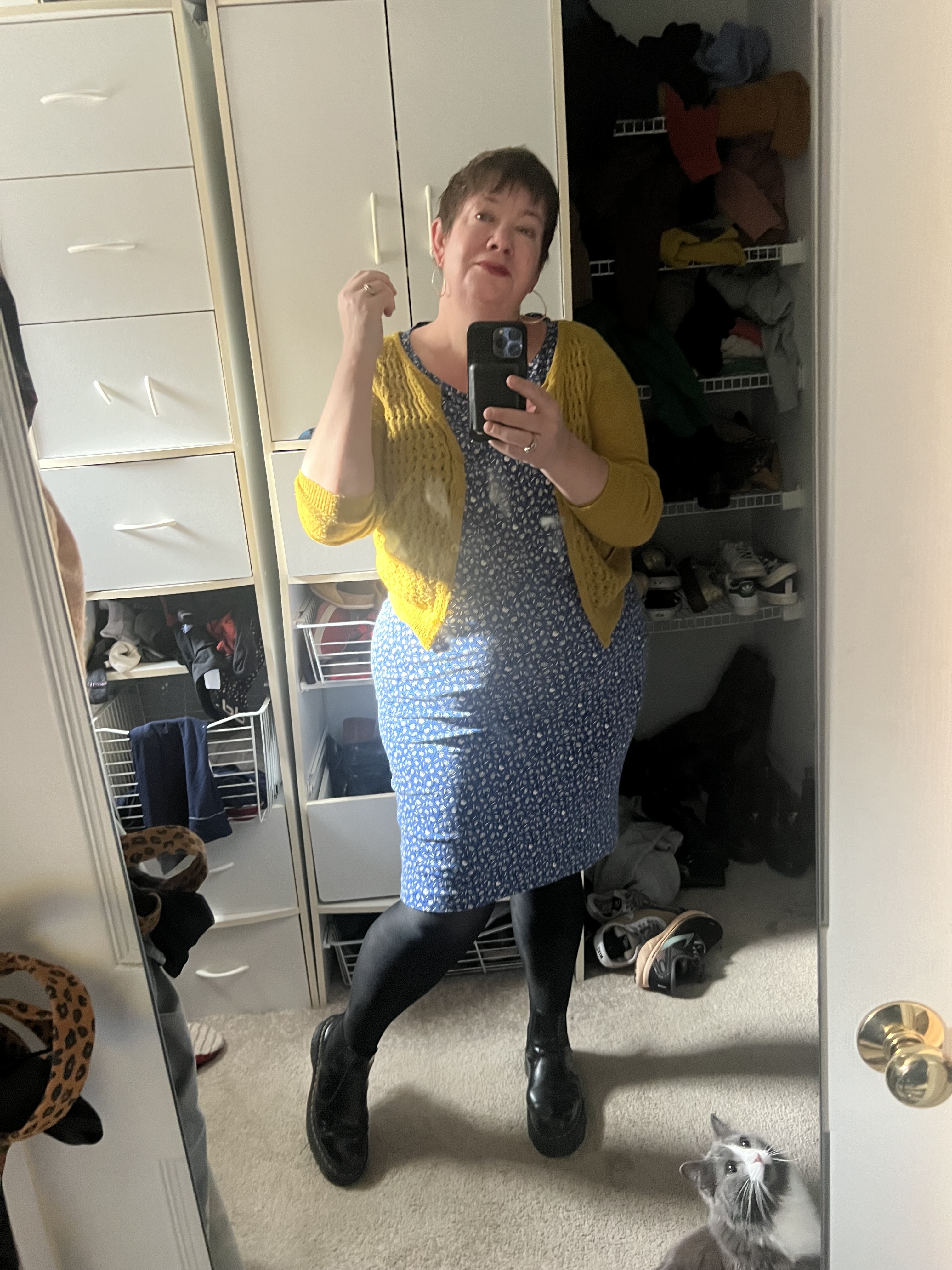
Cardigan: In fall of 2000, in the last months of the Clinton Administration, between Y2K and the election, when we thought the WTO protests would be the hallmark civil unrest of our young lives, a friend of mine lamenting the state of the current cultural landscape famously quipped that he secretly hoped George W. Bush would win the election, “because the music will get better, angrier, more urgent.”
I was horrified, even then, before I knew, before I could possibly know, what the next year would bring. I told him he was an idiot or an asshole or both. He laughed it off, but I’m at least as irrationally superstitious as I am skeptical, and months later, sitting in an Asheville hotel room making swag bags for a fundraiser and watching the recount, I think I held him partially responsible. Like, why would you say such a thing?
I remember at various points during the Bush Administration, after 9/11, after we went to war in Afghanistan and Iraq, after Abu Ghraib, after Katrina (maybe, for me, especially after Katrina), I wanted to ask my friend: do you think the music got better? But by then, he and I weren’t as close, and I guess the question is trivial enough to be meaningless, even insulting. Twenty-five years later, the answer is entirely subjective, between you and The Strokes (“Reptilia” is still their best song, by the way, but we can argue about that later). Did it get angrier and more urgent? Matter of context. I can confirm there was some pretty fierce rap and plenty of metal, hardcore, and noise in the very early 2000s. And some protest material in all the predictable genres.

But what I personally remember about the early oughts, and the various obliterating ends to both the 1990s and my (extended) adolescence was not so much passion and fury, but that “The Fellowship of the Rings” came out and everybody got really into the The Shins. Not necessarily in that order. We went deep on nostalgia, patchworked owl art, McSweeney’s, concept albums about pink robots, heartfelt anthems about death that somehow soothed our inner child, “The Gilmore Girls” and “The O.C.” and suddenly a bunch of 30ish Don DeLillo fans were reading “Harry Potter.”
I’m not being a contrarian. I was this person. I was into all of those things. Like hard into all those things. Ientered early adulthood on the shit end of the 1990s, took one look at the world around me, faced the first tech-bust informed labor market, and retreated into a lengthy post-college stasis that consisted of a lot of PBR, “Buffy the Vampire Slayer” re-runs, chipper, non-threatening indie rock, and a lot of parties with scenesters whose studied dedication to louche mustaches and appearing fashionably self-destructive nearly matched the ambition they put into their undergraduate honors theses 2-3 year previous.
I can’t put this on the millennials. The oldest of them were still basically teenagers and the youngest were still in diapers. Looking at things now, from a couple decades out, and all that has come since, it seems like when our cultural moment came to produce the primal scream of a new and fucked up world being born, we put a bird on it.
Where was I? Oh right. The Sweater.
Anthropologie was still a new thing in the oughts. Grown-up urban outfitters. Whimsical. Twee. Boho, but in a way that might get you fired in the era before every day became Casual Friday. This sweater dates back, a while. Like early Obama, after I’d started complaining about how I thought the Arcade Fire were overrated but before Zooey Deschanel achieved full manic pixie dream apotheosis, back when it was still a big deal to have a sweater that new came looking like the nubby, vintage thing your grandma made. And to its credit, the sweater still looks the same 12-15(?) years later.

Dress: I found this dress at a local consigment shop, conveniently located between a nail salon and the Andean chicken joint, across the parking lot from the pet food store. I often run in wearing gym clothes after taking a turn on a nearby greenway. Every time I do I can feel the abject horror of the staff, seeing me and thinking, dear lord, do not let that bucket of sweat try on these clothes Fortunately for them, I am not a monster. And I have enough experience thrifting to eyeball a garment with reasonably accuracy. Especially if it is stretchy, as this dress is.
Consignment shops, in general, are a crapshoot. Sometimes can get a good deal on an actual designer piece, if you think it’s a a $150 for a wrinkled, slightly shabby $1000 dress is a good deal (debatable). About ten years ago, I bought a very nice Marc Jacobs handbag at this particular consignment shop for about $40 that still had a a Metrocard and a pack of Parliaments secreted away in an interior pocket. I thought that was hilarious. I’ve never quite figured out their pricing structure, but it seems to privilege mall brands and garments from big box stores. Because that stuff is already a barely elevated version of fast fashion, it’s oftentimes, pretty cheap brand new, and even so priced such that it can be immediately (and significantly) discounted. To make any kind of profit, consignment stores, online sellers (and sometimes actual thrift shops) end up pricing a used Old Navy t-shirt higher than the exact same brand new one on sale. All of which makes the experience of buying secondhand an order of magnitude more annoying than it used to be. Because there’s so much Old Navy. And so much Target. And so much fast fashion. And kids selling 1999-vintage half-shirts from Abercrombie & Fitch at couture prices on Depop. I don’t want to sounds like an old person, but I miss the thrift shopping of of my youth. I did not know how good I had it.
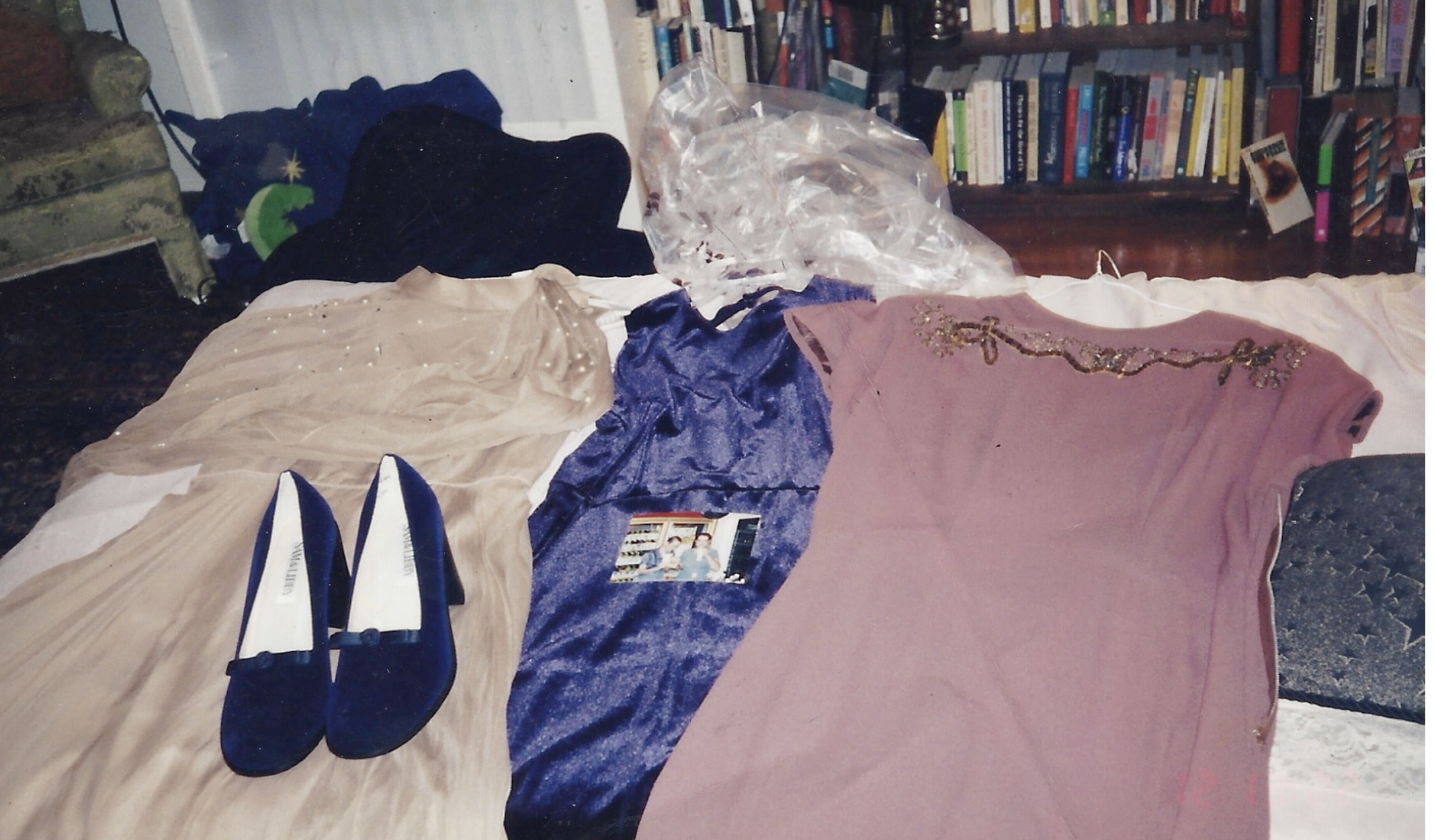
This was dress was yellow-sticker discounted, so it was cheap. And I’m a sucker for periwinkle-adjacent blues. With the sweater and tights, this dress could basically have been in wardrobe rotation at any point since, roughly, my senior year of high school. Nostalgia.
Earrings: There is a store on Franklin Street in Chapel Hill called Light Years. It’s been there forever, or at least since the North Carolina State Latin Convention in 1991. They sell earrings (often hippie-ish), sunglasses, inexpensive handbags, incense, crystals, and at least for a while in the 1990s, Manic Panic hair dye.
Every college town has at least one of these stores. And every non-college hippie town has several (at any point, my hometown has somewhere between 8 and infinity of them). At some point in the 1990s, Lightyears franchised out and opened locations at a few malls, notably Four Seasons, in Greensboro, which also picked up the Intimate Bookshop for a few years. I used to visit the Four Seasons Light Years to buy hair dye my early during my Greensboro residency. At the time, I was fond of a particularly vivid magenta shade, a terrible choice given that my natural skin tone tends to veer into cooked lobster territory at first sign or sun, sweat, spirits, or shame. And given that I existed in a state of perpetual (and likely deserved) embarrassment throughout most of my youth, one can assume that I spent my sophomore year of college clashing with my own hair.
I don’t remember the last time I visited Light Years. I used to drop in semi-regularly on the way out of the Varsity Theater after a matinee. I bought these earrings there, sometime toward the end of my record store employment, on a lunch break from the record store.
Outfit: I wore this to work from home on a rainy weekday because I thought it would cheer me up to see color reflected back when I sat in Zoom meetings. It made me nostalgic. And not in an entirely positive way. Sometimes you think about the past and it’s comforting. Sometimes you think about the past and it’s drenched in regret. And sometimes you think about the past and it just makes you feel kind of antsy and old, inclined toward Westerbergian lament.
Now I’m in the mood for Pepper’s Pizza, the late and lamented. And no number of fancy brick-oven joints since opened by celebrated chefs will satisfy the itch.
Damn.
Cardigan: Anthropologie, 2010 (ish)
Dress: Consignment store, 2023
Earrings: Light Years, Chapel Hill, 2011(?)
Boots: Dr. Martens, 2022


 Tiny Commotions